The Runners
They didn't choose the Maze, but they chose each other—and that changed everything.

The Runners are the young men—and, in later stages of the experiment, young women—who are deposited into the ever-shifting Maze by the shadowy organization WCKD. They are the living core of the trilogy: not warriors, not scientists, but teenagers forced to navigate a labyrinth that reconfigures itself every night, all while being observed, studied, and ultimately harvested for their biological data. Their survival, their memories, and their bodies are the raw material of WCKD's cure for the Flare.
Across the three-part saga, the Runners evolve from a frightened, fractured group of strangers into a tight-knit band of survivors who learn to trust one another, question their captors, and ultimately turn the tables on the very institution that created their suffering. They are the audience's anchor in a world of cold laboratories and engineered disasters, and their journey from passive subjects to active rebels is the emotional spine of the entire franchise.
- Role
- Test subjects and inhabitants of the Maze / the Scorch
- Affiliation
- WCKD (as subjects); later allied with the Gladers
- First appears
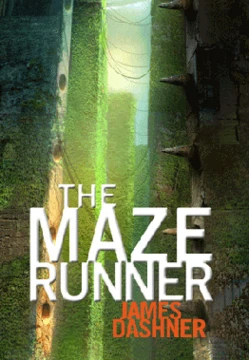
- The Maze Runner (2009 novel / 2014 film)
- Notable members
- Thomas, Minho, Newt, Alby, Gally
- Primary environment
- The Maze, the Glade, the Scorch, the compound
- Status by trilogy's end
- Survivors; key figures in the fight against WCKD
Lore & Background
The Runners arrive in the Maze in small, periodic batches of Newts, each one dropped in with no memory of who they were before and no explanation for why they are there. The first rule of the Glade is simple: figure out the Maze. The second rule, learned the hard way, is that the Maze will try to kill you. The walls shift every night, the Flies hunt in the dark, and the only constant is the group itself. Leadership is informal and contested—Minho commands respect through experience and a no-nonsense pragmatism, while others like Alby bring brute strength and Gally brings a volatile, self-serving edge that fractures the group's trust.
What the Runners do not know, at first, is that they are not merely trapped. They are being used. WCKD has engineered the Flare, a devastating pandemic, and the Runners' immune systems—specifically the presence or absence of the pathogen in their blood—are the data WCKD needs to synthesize a cure. The Maze is a stress-test environment; the Scorch is a second trial. Every death, every panic response, every drop of blood drawn is a data point in a corporate R&D pipeline that treats teenagers as reagents in a beaker.
The emotional weight of the Runners' story lies in the gap between what they think they are (survivors in a puzzle) and what they actually are (specimens in a lab). The moment that gap closes—when the truth about WCKD, the Flare, and the Gladers' complicity is revealed—the group must decide whether to keep running or to run at something. That decision, made collectively and imperfectly, is what transforms a bunch of scared kids into the people who ultimately bring WCKD down.
In Their Own Story
The walls groaned as they shifted, a sound like a continent cracking its own spine. Thomas pressed his back against the cold stone and counted the seconds until the new configuration locked into place. Somewhere ahead, a Flies' nest dripped black ichor onto the grass. Minho was already three corridors down, his silhouette a dark smear against the pale sky, calling back a string of directions that made no sense until you'd already walked them. Newt's hand found his shoulder—brief, grounding, gone. They didn't talk about the last one they'd lost. They didn't talk about the vials they'd seen in the storage room, the little glass tubes labeled with numbers that matched their own. They just ran. Because running was the only language the Maze spoke, and the only language they had left.
Reader's Guide
Purpose: The Runners exist, from WCKD's perspective, as biological test subjects. Their stress responses, immune markers, and survival instincts under extreme pressure are the variables WCKD is measuring. From the Runners' own perspective, their purpose is simply to stay alive, map the Maze, and protect the Newts who keep arriving. Over time, that purpose expands: to understand what is being done to them, to find the people responsible, and to ensure the Flare is stopped on their terms, not WCKD's.
Leadership: There is no single appointed leader. Minho functions as the de facto authority in the Glade, enforcing rules and managing the Newts. Thomas, as the latest Newt, becomes the narrative and moral center, and his growing agency pushes the group toward action. Alby, Gally, and others represent competing impulses—strength, self-preservation, rebellion—that keep the group dynamic in tension rather than hierarchy.
Internal dynamics: Trust is the scarcest resource. Newts are suspicious of the established boys; the established boys are suspicious of the Maze's latest trick. Gally's betrayal, the loss of members to the Flies or the Scorch, and the slow revelation of WCKD's true agenda all strain the group. Yet the bonds that form—Thomas and Newt, Thomas and Minho, the quiet loyalty of Alby—are what hold them together when the world keeps changing shape around them.
Relation to other groups: The Runners are pitted against the Maze itself (a WCKD construct), hunted by the Flies, and ultimately opposed by WCKD as an institution. The Gladers, initially invisible handlers, become both allies and complicating factors as the truth about their role in the experiment surfaces. The Runners' conflict is never simply physical; it is a fight over who gets to define their own story, and whether a cure built on their suffering is a cure at all.
Did You Know?
- The Runners' memories are deliberately erased before they enter the Maze, a detail that underscores WCKD's total control over their identity and agency from the very first moment.
- The Maze does not merely shift its layout randomly; the reconfiguration is a controlled variable in WCKD's experimental design, making the environment itself a data-collection tool.
- The group's composition changes across the trilogy—new members arrive, others are lost, and the gender dynamics shift as female Runners appear in later stages—reflecting the expanding scope of WCKD's testing.
- The Runners' ultimate rebellion is not a single battle but a sustained refusal: refusing to be passive data points, refusing to let WCKD define the terms of the Flare's cure, and insisting that the solution be built with
More in Factions & Organizations
Elsewhere in the The Maze Runner universe
Spotted an error? Know more?
This is a living reference — every entry is fact-audited, and reader corrections feed straight into our audit queue. Suggest an edit · See this site's audit record