The Gladers
They ran the Maze, crossed the dead world, and faced the truth WCKD buried.

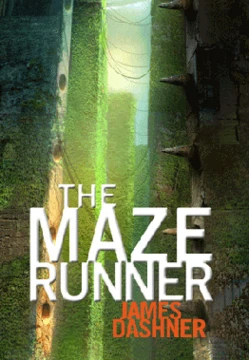
The Gladers are the group of teenage boys who survived the first Maze — a colossal, ever-shifting labyrinth of concrete walls constructed by WCKD as a controlled experiment. After decoding the Maze's rotating puzzles and breaking through its final gate, they earn the name 'Gladers' from their act of glading (escaping) the structure. They are then housed in a sterile, WCKD-associated facility where they are kept under surveillance, fed, and studied, effectively serving as unwilling test subjects in a far larger operation.
Across the trilogy, the Gladers are pulled from one controlled environment to the next — a safe room, a desolate irradiated wasteland called the Scorch, and finally the heart of WCKD itself. Their bond, forged in the claustrophobic terror of the Maze, becomes the emotional core of the story as they confront the truth about the Flare, the disease wiping out the outside world, and the role their own biology plays in WCKD's plan to end it.
- Type
- Survivor group / WCKD test subjects
- First appears
- The Maze Runner (Book 1)
- Key members
- Thomas, Newt, Minho, Alby, Chuck
- Affiliation
- WCKD (unwilling)
- Status
- Survivors (end of trilogy)
- Settings traversed
- The Maze → WCKD facility → The Scorch → WCKD headquarters
Lore & Background
The Gladers' identity is inseparable from the Maze itself. Each boy was dropped into the compound with his memories wiped, given a name and a role among the Runners, and forced to solve a wall-puzzle that reset every night. The Maze was not a prison in the conventional sense; it was a laboratory. WCKD designed it to observe how a group of adolescents would organize, conflict, and ultimately solve a problem under extreme stress. The Gladers' name — a rough, self-given title celebrating their escape — is a small act of defiance against the institution that built them into an experiment. They are not soldiers, not volunteers, not even patients in any informed sense. They are specimens who got out.
After the escape, the Gladers are relocated to a WCKD facility where the walls are white, the food is bland, and the surveillance is constant. Newt, the oldest and most weathered of the group, assumes a quiet mentor role, while Minho carries the weight of having been the Maze's de facto leader. Thomas, the newest arrival who solved the final puzzle, becomes the group's reluctant anchor. Alby and Chuck round out the core, each processing the trauma in their own way. The facility is safe but gilded; the Gladers sense they are being kept for a reason they cannot yet name.
The revelation that reshapes everything comes later: the Flare, a pathogen that has devastated civilization outside the walls, may be curable — and the cure is encoded in the blood of the very boys who ran the Maze. WCKD did not build the Maze to test problem-solving. It built the Maze to produce, under the unique conditions of the experiment, a generation of carriers whose immune systems held the key to saving the outside world. The Gladers' entire existence, from the first blank-eyed morning in the compound to the final confrontation at WCKD headquarters, was engineered. Their agency, their friendships, their suffering — all of it was a variable in someone else's equation.
In Their Own Story
The corridor smelled of antiseptic and cold recycled air. Thomas pressed his back against the cinder-block wall and watched Newt pace the length of the room, four steps forward, four steps back, a metronome of restless energy. The facility's single overhead light hummed at a frequency that made his teeth ache. Through the reinforced glass at the far end, a WCKD technician in a white coat was writing something on a clipboard, then looking up — not at any of them, but at Thomas specifically. The way she looked at him was the way a researcher looks at a petri dish. Not with malice. With interest.
Minho was already at the window, jaw tight, arms crossed. "They're going to move us again," he said. Not a question.
Alby laughed, a short, ugly sound. "Great. Another room. Another wall. Another puzzle with a different font."
Chuck said nothing. He never said much anymore. He just stood in the corner, picking at a thread on his sleeve, and Thomas understood that the silence was louder than any of them.
Newt stopped pacing. Looked at Thomas. In his eyes was the same expression he'd worn on the last night in the Maze, the night the walls finally stopped moving and the gate opened onto grey, irradiated sky. Not relief. Recognition. The look of a boy who had solved one problem and understood, with a cold certainty in his gut, that the next one was bigger, and the stakes were his blood, his cells, his very biology, held in a vial in a lab he hadn't seen yet.
"We keep moving," Newt said quietly. "We keep solving. And one day we walk out of the last room and there's no gate after it."
No one argued. No one needed to. They had already run the first maze. They knew the shape of the game. They just hadn't yet learned the name of the player who was running them.
Reader's Guide
Purpose: The Gladers exist, in WCKD's design, as a biological resource — a cohort of adolescents whose immune systems were shaped by the Maze's conditions to carry a potential cure for the Flare. In the story's emotional register, though, their purpose is survival, loyalty, and the slow, painful discovery of what they were made for.
Leadership: There is no single commander. Minho carries the authority of having led the Runners inside the Maze; Newt provides the elder's steadiness and tactical memory; Thomas, as the boy who cracked the final puzzle, becomes the group's symbolic center. Leadership is shared, contested, and constantly renegotiated as new threats emerge.
Internal dynamics: The group is tight but fraying. Alby's bitterness, Chuck's withdrawal, Newt's overprotectiveness, and Minho's refusal to be told what to do create micro-conflicts that mirror larger tensions. Trust is the currency, and it is spent heavily in the Scorch crossing, where the group is stretched thin and individual choices test collective bonds.
Relation to other groups: The Gladers are in direct tension with WCKD, who keep them in gilded captivity and ultimately demand their cooperation. They are also in contrast to the Cranks (the infected outside) and to WCKD's own staff, who view the boys as assets rather than people. Across the trilogy the group fractures — separated by the Scorch, divided by the revelation of their purpose, and ultimately forced to choose between WCKD's plan and their own — before re-forming around a shared, self-chosen mission.
WCKD's stated mission is to cure the Flare and save civilization. The Gladers' story reveals the true agenda: the boys were never patients. They were the cure, grown in a maze, and WCKD intended to harvest them.
Did You Know?
- The term 'Gladers' is a self-given name born from the act of 'glading' — escaping — the Maze, a small act of identity reclamation against WCKD's dehumanizing experiment.
- The Scorch, the irradiated wasteland the Gladers must cross in the second book, is a direct consequence of the Flare pandemic and represents the outside world they were walled off from.
- Newt is the oldest member of the group and often serves as the emotional and tactical anchor, a role that mirrors the elder-protector dynamic common in survival narratives.
- The revelation that the Gladers' blood holds a potential Flare cure reframes their entire existence — the Maze, the facility, the Scorch crossing — as a single, long experiment designed to produce them.
More in Factions & Organizations
Elsewhere in the The Maze Runner universe
Spotted an error? Know more?
This is a living reference — every entry is fact-audited, and reader corrections feed straight into our audit queue. Suggest an edit · See this site's audit record