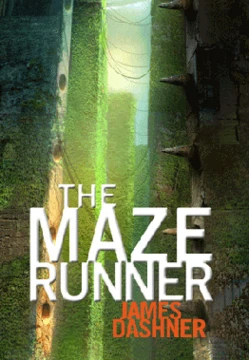
The Minos
The Maze's engineered apex hunter, built to keep the Runners running.

The Minos is the apex predator of the Maze — a massive, multi-legged bio-engineered creature that patrols the shifting corridors with terrifying, mechanical precision. Crafted by WCKD as part of their experimental apparatus, it functions as the labyrinth's ultimate enforcement mechanism: a singular, overwhelming kill-switch that keeps the Runners moving, thinking, and never settling. Where the Grievers are numerous, somewhat predictable, and almost pitiable, the Minos is something else entirely — a deliberate instrument of dread, designed to remind every Runner that the Maze is not a puzzle to be solved but a cage to be endured.
Its presence reshapes every decision the Runners make. Timings shift, routes are abandoned, and the entire rhythm of life in the Glade bends around the creature's arrival. In the broader WCKD architecture, the Minos is not merely a monster; it is a variable in an experiment, a pressure point that ensures the subjects remain stressed, reactive, and measurable.
- Type
- Bio-engineered creature (apex predator)
- Creator / Controller
- WCKD
- Primary location
- The Maze
- Threat profile
- Lethal; patrols on a discernible pattern
- Distinguishing features
- Massive body, multiple legs, overwhelming physical presence
- First appears
- The Maze Runner (novel and film)
- Status
- Active within the Maze
Lore & Background
In the world of the Maze, the Minos occupies a tier of threat that the Runners quickly learn to respect above all others. It is not a wild animal, not a product of the Flare, and not a creature that evolved in the overgrown corridors. It was made. WCKD's laboratory hands shaped its biology, calibrated its movements, and set it loose as a living checkpoint. The Runners discover its patrol rhythm through hard-won observation — which corridors it favors, when it emerges, how it reacts to noise and motion — and they build their survival around that knowledge with the same desperate precision they apply to the walls themselves.
The Minos is deliberately distinct from the Grievers. Where the Grievers swarm, click, and seem almost confused, the Minos moves with purpose. It does not wander; it hunts. It does not react to the Runners so much as it enforces a rule: you will not stay still, you will not explore freely, you will not think the Maze is something you can outsmart. In WCKD's design philosophy, the Minos is the variable that keeps the experiment honest. Without it, the Runners might find equilibrium. With it, they remain in a state of perpetual, measurable stress.
For the characters inside the Glade, the Minos becomes almost a clock — a living metronome that defines the day's safe hours and its deadly ones. Newcomers who arrive without that knowledge are the first to be lost. The creature's mere silhouette in the overgrown passages is enough to send a group scrambling, and its full assault is a memory the survivors carry as a kind of trauma they cannot fully articulate to those who have never seen it.
In Their Own Story
The corridor smelled of wet stone and crushed fern. Newt pressed his back against the wall and counted his own heartbeats, because counting anything else felt like a luxury. Behind him, the others held their breath. The click-click-click had started three minutes ago, low and rhythmic, like a fist knocking on a door that wasn't there.
"It's the long route," he whispered. "Not the short one. It's taking the long route."
No one moved. The light shifted as something enormous passed overhead — not a shadow, exactly, but a thickening of the air, a displacement of dust motes that hung in the pale glow like slow snow. A leg, then another, then another, each one striking the ground with a soft, wet thud that vibrated up through Newt's boots and into his teeth. The creature didn't roar. It didn't need to. The sound it made was worse: a low, grinding hum, like a machine that had forgotten it was supposed to be alive.
They waited. The hum faded. The dust settled. And then, one by one, they exhaled — not in relief, but in the careful, measured way you breathe when you're still not sure you're allowed to be alive.
Reader's Guide
The Minos is introduced early as a pure, visceral threat: something huge, multi-legged, and lethal that the Runners must avoid. The reader learns its patterns through the characters' hard-won observation, not through exposition. It is a rule of the Maze, as fixed as the walls.
As the trilogy unfolds, the Minos is recontextualized. WCKD's propaganda frames the Maze as a protective enclosure, a place where the Runners are safe from the Flare while WCKD works on a cure. The truth the characters piece together is far uglier: the Maze is a laboratory. The Minos is not a guardian; it is a stimulus. It exists to generate stress responses, to keep the subjects reactive and measurable. The Scorch, which the characters encounter later, is the world after the Flare has already done its work — a scorched, irradiated wasteland that WCKD's public messaging never honestly describes. The City, WCKD's gleaming headquarters, is presented as a sanctuary, but the characters discover it is a controlled environment where the survivors are still subjects, still being observed.
The Minos sits at the center of this deception. WCKD's narrative says the Maze is a test of human resilience in a benign setting. The characters' discovery is that the Minos is a weaponized variable, and the Maze is a cage with a lock you were never meant to find.
Book versus film: the novel's Minos is described with a slightly more insectoid, less overtly arachnid quality, and its encounters are rendered through the Runners' fragmented, fear-driven perception. The film gives the Minos a more visually distinct, spider-like silhouette and places it in more sustained action set-pieces, making it a recurring on-screen presence rather than a thing glimpsed in panic. Both versions agree on its function: it is WCKD's living enforcement mechanism, and it is not to be trusted, reasoned with, or survived twice.
Did You Know?
- The Minos is deliberately distinct from the Grievers in both design and function — where the Grievers are numerous and somewhat erratic, the Minos is singular, purposeful, and operates on a discernible patrol pattern tha
- The Runners' survival strategy in the Maze is built around timing their movements relative to the Minos's appearance, effectively treating the creature as a living clock that defines safe and dangerous windows.
- In WCKD's experimental framework, the Minos is not a random hazard but a calibrated variable — its presence is designed to keep the subjects in a state of measurable, sustained stress.
- The Minos's design and behavior differ in emphasis between the novel and the film, with the film granting it a more visually prominent, recurring on-screen role in extended action sequences.
More in Lore & History
Elsewhere in the The Maze Runner universe
Spotted an error? Know more?
This is a living reference — every entry is fact-audited, and reader corrections feed straight into our audit queue. Suggest an edit · See this site's audit record