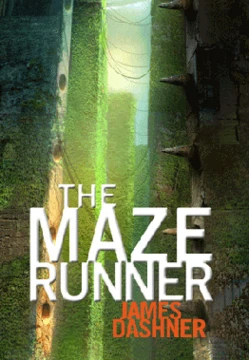
WCKD
The hand that built the Maze is the hand that will unmake the world.

WCKD is the vast, shadowy institution at the heart of The Maze Runner universe. It is the organization that designed, built, and operated the Maze—the labyrinthine experiment in which a group of boys are trapped, forced to solve its ever-shifting corridors while hunted by the Grievers. WCKD presents itself as a global scientific body dedicated to finding a cure for the Flare, the catastrophic disease that has devastated nearly all of human civilization. Behind that public mission, however, lies a fractured hierarchy: the WCKD Board and its upper echelon pursue agendas that the Gladers, a dissenting faction working within the organization's own infrastructure, believe are fundamentally at odds with actually saving lives.
For the Runners and the Gladers alike, WCKD is simultaneously savior and predator. It is the hand that dropped Thomas into the Glade, the voice on the radio, the lab coats and sterile corridors of the facility beyond the Maze. It is also the entity whose true endgame—whether to cure the Flare, weaponize it, or simply maintain a system of control over the remnants of humanity—remains the central question the characters fight to answer across the trilogy.
- Type
- Global scientific and experimental organization
- Primary function (stated)
- Develop a cure for the Flare through controlled experiments
- Primary function (contested)
- Maintain control over post-Flare society; motives questioned by the Gladers and the Runners
- Key internal factions
- WCKD Board / upper leadership; The Gladers (dissenting faction)
- First appears
- The Maze Runner (Book 1, 2009)
- Status in series
- Active and expanding; its full scope revealed across the trilogy
- Notable operators
- The Gladers (including Teresa and Newt); unnamed Board members
Lore & Background
In the world of The Maze Runner, the Flare arrived without warning and consumed cities, nations, and generations. The survivors who remained found themselves under the umbrella of WCKD, an organization that had been quietly assembling the infrastructure for the crisis long before the first outbreak. WCKD's public narrative is one of desperate, heroic science: the Maze is a controlled environment in which the cognitive and survival responses of the Flare-exposed can be studied, and the data harvested will yield the cure that every remaining human being needs. The Gladers, who operate from a hidden facility and communicate with the Runners through the Maze's radio system, believe this story. They see themselves as the conscience of an otherwise corrupt institution, pulling the experiments toward genuine healing rather than exploitation.
The Runners, of course, experience WCKD as something far more brutal. They are dropped into the Glade with no memory, no context, and no consent. The Maze resets. The Grievers hunt. The walls close. WCKD is the invisible architect of their suffering, the voice that tells them to keep running while its true intentions remain locked behind glass doors they will never be allowed to open. For Thomas, Minho, and the others, WCKD is less a scientific body and more a god that plays with ants—indifferent, vast, and utterly unconcerned with whether the ants survive the experiment.
As the trilogy progresses, the scope of WCKD's operations becomes clearer and more disturbing. It is not merely a Maze; it is a global apparatus. Silver City, the Flare-infected zones, the genetic research, the political manipulation of surviving nations—all of it threads back to WCKD's laboratories and boardrooms. The Gladers' belief that they are the good guys within the system begins to fracture as the characters discover that the line between the Gladers and the Board is thinner, and more compromised, than anyone wanted to admit. WCKD is not simply a villain; it is the system itself, and the system is the problem.
In Their Own Story
The corridor was white. Not the warm white of a hospital, not the chalky white of the Glade's walls after the sun went down. This was a cold, surgical white, the kind that made your teeth ache if you stared too long. Teresa walked it barefoot, her slippers abandoned somewhere behind the security checkpoint, and the tile was so cold it burned through the soles of her feet. She didn't care. She was counting paces. Forty-three to the first junction. Ninety-one to the observation deck where the Board would be watching the next batch of boys wake up in the Glade, their memories still wet and useless, their eyes still searching for a face they couldn't name.
She pressed her thumb to the reader. The door exhaled open. Beyond it, the Maze was a small green square on a holographic display, the Runners reduced to blinking dots. She could see Thomas's dot, always the one that drifted off the group's cluster, always the one that pressed too close to the walls. She could see Minho's dot, steady, commanding, keeping the others in a tight knot. She could see the Grievers' dots, the slow red pulses that crept along the outer perimeter, patient as tides.
A voice spoke from the ceiling. Not a person. A recording, or an algorithm, or something in between. "Dr. Woods, your observation window is limited to four minutes. The Board requests your input on Phase Three parameters."
Teresa looked at the dots. Four minutes. She had four minutes to pretend she was still on their side.
She straightened her spine, swallowed the taste of copper and fear, and began to speak.
Reader's Guide
WCKD is the institutional engine of the entire trilogy. On the surface, it is a post-apocalyptic research organization: the Flare has killed the vast majority of the human population, and WCKD claims its sole purpose is to engineer a cure. The Maze is its flagship experiment—a controlled, repeating environment in which Flare-exposed subjects (the Runners) are observed under extreme stress, and the data is used to model the disease's behavior. The Gladers, who operate from a hidden facility and maintain radio contact with the Runners, present themselves as the ethical core of WCKD, steering the experiments toward genuine healing.
In practice, the Runners experience WCKD as a cage. There is no consent, no explanation, no exit. The Maze resets, the Grievers hunt, and the boys are treated as biological data points. The Gladers' radio voice is the only human thread, but even that is mediated, filtered, and controlled by WCKD's infrastructure. The 'science' WCKD claims is real in its mechanics—the Flare is a genuine pathogen, the Maze is a genuine experimental environment—but the ends to which it is put are where the organization's true nature reveals itself. The Board's priorities are control, resource management, and the preservation of a power structure, with the 'cure' serving as both genuine goal and political tool.
As a plot device, WCKD functions as the overarching antagonist system: it is the reason the Maze exists, the reason the Runners were selected, the reason the Gladers are trapped in a loyalty they no longer trust. Thematically, it embodies the question of whether an institution that commits atrocities in the name of survival can ever be reformed from within, or whether the only ethical response is to tear it down entirely. The Gladers' arc across the trilogy is, at its core, the slow realization that being the 'good guys' inside a broken machine does not make the machine less broken.
Did You Know?
- The Gladers are not external rebels opposing WCKD from outside; they operate within WCKD's own infrastructure and facilities, making their dissent an internal schism rather than a revolution against a foreign power.
- The Maze is not a static puzzle. It resets, reconfigures, and changes its layout, meaning the Runners are solving a different problem every cycle rather than working toward a single fixed solution.
- WCKD's operations extend far beyond the Maze into broader global infrastructure, including the management of Flare-infected zones and the governance of surviving human populations, revealing it as a quasi-state entity ra
- The Flare is not merely a backdrop or setting detail; it is the central scientific problem that WCKD's entire existence is built around, and the characters' struggle is as much about whether a cure is possible as it is a
More in Powers & Artifacts
Elsewhere in the The Maze Runner universe
Spotted an error? Know more?
This is a living reference — every entry is fact-audited, and reader corrections feed straight into our audit queue. Suggest an edit · See this site's audit record