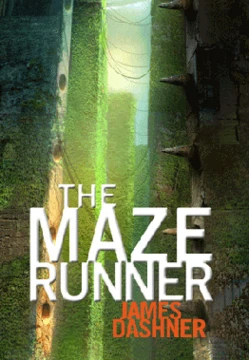
The Tunnels
Where the walls close in and the way out rewrites itself before your eyes.

The Tunnels are the narrow, enclosed passages that thread through the Maze's structure—tight corridors where towering walls press close overhead and the open sky vanishes entirely. Unlike the broad, sun-drenched plazas the Runners cross during their explorations, these constricted routes force the boys into single-file movement, limited sightlines, and a constant awareness of the walls grinding and shifting around them. They represent the Maze at its most claustrophobic and psychologically punishing, stripping away the spatial reference points the Runners rely on to navigate.
As a setting, the Tunnels serve as a crucible for the Gladers' teamwork and nerve. Every expedition into the Maze carries the risk of being funneled into a passage that narrows, doubles back, or simply vanishes when the walls reset. They are where the Maze stops being a puzzle to be solved and becomes a predator to be survived.
- Location
- Within the Maze (Book 1 setting)
- First appears
- The Maze Runner (Book 1 of the trilogy)
- Primary navigators
- The Runners (Thomas, Newt, Minho, and the other Gladers)
- Key mechanic
- Wall shifts alter tunnel length, direction, and accessibility
- Threat profile
- Claustrophobia, disorientation, Grievers, wall shifts
- Structural material
- Stone and concrete-like surfaces, rough-hewn
Lore & Background
The Maze was engineered by WCKD as a test of human adaptability, and its design deliberately mixes open, legible spaces with the suffocating uncertainty of the Tunnels. In the open plazas, a Runner can scan the horizon, count wall-segments, and build a mental map. In the Tunnels, that strategy collapses. The ceiling drops, the light thins to a grey smear far above, and the only reference is the texture of the stone under your palms and the echo of your own breathing bouncing off surfaces inches from your face. The Runners learned early that a tunnel that felt like forty paces one morning could be a dead-end the next, because the walls do not merely shift their positions—they reconfigure the entire topology of the passage network.
The psychological toll is as significant as the physical danger. Minho, the leader of the Runners, built his authority partly on the calm certainty of a man who had walked the Maze's corridors a hundred times. The Tunnels were where that certainty frayed, because no amount of repetition could outpace a layout that changed without warning. Thomas, arriving with no memory and no map, found the Tunnels both terrifying and oddly fair: in the dark, a new boy and a veteran are equally lost, and survival depends on trust, communication, and the willingness to keep moving when every instinct screams to stop.
The presence of Grievers in the Maze means that a tunnel can also become a hunting ground. The creatures' enormous limbs and mandibles make narrow passages a nightmare scenario, and the Runners developed an unspoken rule: if you hear the wet, clicking sound of a Griever's legs on stone ahead of you, you do not turn back. You run forward, because in a tunnel, there is no room to sidestep, no open ground to sprint across. The Tunnels reduce the Maze's vast, almost architectural grandeur to a single, breathing throat, and the boy inside it is either swallowed or he escapes.
In Their Own Story
The air changed first. One moment the dry, sun-baked heat of the open plaza was in Thomas's lungs; the next, the temperature dropped and the stone smelled of damp and something older, like iron filings. The passage narrowed. His shoulders brushed both walls. Newt's headlamp cut a pale cone ahead, revealing only the next three feet of rough-hewn rock before the beam dissolved into shadow.
"Don't stop," Newt whispered. His voice sounded wrong in the tight space—flatter, more urgent, as if the tunnel were swallowing the resonance out of it.
Thomas kept moving. Each step sent a faint clatter that echoed back at him from an angle he couldn't identify, as if the corridor forked somewhere just beyond the light. The walls were close enough that he could feel their grain, the cold seeping through his jacket. Above, far above, a thin vein of grey sky pulsed like a dying vein, and then it was gone. The ceiling had lowered. The light was gone.
Behind them, Minho's voice carried a controlled calm that Thomas recognized as the sound of a man counting his own heartbeats to keep them steady. "Stay in line. Palms on the wall. If the wall moves, you move with it."
And then the grinding started. A low, tectonic groan from deep in the stone, felt more in the teeth than heard. The wall to Thomas's left shuddered, and the passage ahead tilted, just slightly, as if the entire corridor were a drawer being slid a few inches to the left. The way they had come in was gone. The way forward had shifted.
Newt exhaled. "Okay. New route. Same rules."
They walked on, into the dark, into the Maze's slow and patient rethinking of where they were allowed to be.
Reader's Guide
The Tunnels are the Maze's narrow, enclosed arteries—passages where the towering walls drop from their usual hundred-plus feet to a ceiling low enough to press against a standing Runner's crown. The surfaces are rough stone and concrete, cold to the touch, often slick with a fine mineral damp that makes footing treacherous. Light is minimal: a thin seam of grey sky far overhead, or the beam of a hand-held lamp, or nothing at all once the walls shift and seal the gap.
Navigation is the central challenge. In the open Maze plazas, the Runners count wall-segments and use the sun's position. In the Tunnels, those cues vanish. You navigate by touch, by sound, by the memory of a path that may no longer exist. The walls shift without warning—a grinding, subsonic groan, a slight tilt in the floor—and the corridor you entered is no longer the corridor you are in. The Runners developed a protocol: single-file, palms on the wall, no one stops, no one turns back.
The sensory profile is distinct from every other part of the Maze. The air is cooler, tighter, carrying the mineral smell of deep stone. Sound behaves differently—whispers carry farther, footsteps echo in confusing directions, and the wet clicking of a Griever's legs on rock is unmistakable and terrifying in a space with no room to dodge. The psychological pressure of enclosed space, of walls that are actively rearranging themselves around you, makes the Tunnels the Maze's most punishing and most honest test. It does not care how long you have been a Runner. In the dark, with the walls breathing, everyone is new again.
Across the trilogy, the Tunnels belong to the Maze era. Once the Runners escape into the Scorch and later reach the City, the enclosed-passage experience gives way to open wasteland and walled urban corridors, but the memory of that grinding, claustrophobic dark stays with the characters. It is where the Maze stopped being a puzzle and became a living, shifting threat.
Did You Know?
- The Maze's walls shift their configuration on a regular cycle, meaning a tunnel passage that is open one day can be sealed or rerouted the next, making memorized routes unreliable.
- The Runners developed a strict single-file, palms-on-the-wall protocol for tunnel sections, because the narrow passages left no room to sidestep a Griever attack or a wall shift.
- The contrast between the Maze's open, sunlit plazas and its enclosed tunnels was a deliberate design choice that tested different survival skills—spatial mapping in the open, trust and composure in the dark.
- Thomas's amnesia meant he entered the Tunnels with no prior map or memory, placing him on equal footing with the most experienced Runners in the Maze's most disorienting sections.
More in World & Settings
Elsewhere in the The Maze Runner universe
Spotted an error? Know more?
This is a living reference — every entry is fact-audited, and reader corrections feed straight into our audit queue. Suggest an edit · See this site's audit record