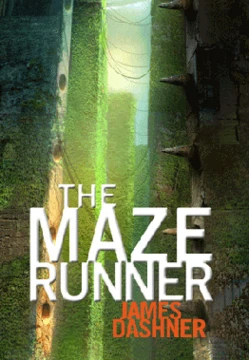
The Transport Corridors
The veins of a world that never lets you see the sky.

The Transport Corridors refer to the network of enclosed passages, tunnels, and walkways that thread through every major setting in The Maze Runner trilogy. From the towering, ever-shifting walls of the Maze itself to the sterile underground arteries of WCKD and the multi-level substructures beneath the walled City, these corridors are the connective tissue that moves people, supplies, and secrets between the world's most important locations. They are where characters run, hide, get lost, and make the choices that define the story.
As a fan-encyclopedia grouping, the Transport Corridors capture a recurring design motif in Dashner's world: enclosed, often oppressive passageways that contrast sharply with the open sky of the Glade or the Scorch. They are spaces of transition, of pressure, and of claustrophobic tension, and they change character dramatically from book to book as the setting shifts from the Maze to the desert to the City.
- Setting type
- Enclosed passage / transit infrastructure
- Appears in
- The Maze, WCKD facilities, the City (across the trilogy)
- Primary function
- Movement and access between sealed locations
- Associated factions
- WCKD, the Gladers, the City's leadership
- Notable trait
- In the Maze, corridors shift and reconfigure; in the City, they are static but heavily controlled
- Atmosphere
- Claustrophobic, industrial, high-pressure
Lore & Background
In the first book, the corridors are the Maze itself: a labyrinth of towering concrete walls that rearrange every night, turning familiar routes into dead ends and forcing the Gladers to memorize, adapt, and survive. The corridors here are not built for comfort; they are built to disorient. Every turn is a gamble, every intersection a potential trap, and the Scorchers that patrol the passages add a biological threat to the architectural one. The boys learn to read the walls, to feel the geometry of a space that refuses to hold still.
By the second and third books, the corridors take on a different character. WCKD's underground facilities are sterile, metallic, and purpose-built: long, lit, and monitored. They feel less like a puzzle and more like a throat—narrow, smooth, and designed to funnel you exactly where the organization wants you to go. The City's sub-levels in the final installment layer these corridors with political control: checkpoints, locked gates, and the constant awareness that someone is watching from above. The physical space becomes a metaphor for the loss of autonomy that defines the trilogy's central conflict.
Across all three settings, the corridors share a common emotional register. They are where characters are most vulnerable—exposed to the dark, to the unknown, to the people in charge. They are where alliances form in whispered urgency and where the gap between trust and betrayal is measured in a few hurried footsteps.
In Their Own Story
The fluorescent tubes overhead flickered and died in sequence, swallowing the corridor in a darkness that smelled of wet concrete and old rust. Thomas pressed his shoulder against the cold wall and counted his breaths. Behind him, the others were a tangle of elbows and whispered arguments, each voice too loud in the narrow space. Ahead, the passage forked. Left, the walls were scarred with old claw marks and the faint orange glow of something still smoldering in a grate. Right, the air was cooler, cleaner, and carried the hum of machinery that meant WCKD was close. He looked at Newt. Newt looked at the fork. Neither of them moved. The dark pressed in from both sides, patient and total, and the only sound left was the slow drip of water somewhere far down the tunnel, marking time like a heartbeat that didn't belong to any of them.
Reader's Guide
The corridors in the Maze are the most physically hostile: walls rise to dizzying heights, the surface is rough-hewn concrete or stone, and the geometry changes overnight. You navigate by touch, by smell, by the memory of a route that may no longer exist. The air is thick, the ground uneven, and the Scorchers turn every passage into a gauntlet.
WCKD's corridors are a different animal. Smooth, lit, and linear. They feel engineered, almost clinical. The floors are polished, the lighting is even and artificial, and the walls are unmarked except for the occasional conduit or pipe. There is no mystery here—only control. You are funneled, not lost.
The City's underground passages layer both: the industrial sterility of WCKD overlaid with the political weight of a society that has walled itself off from the world. Checkpoints, locked doors, and the constant awareness of surveillance transform the corridor from a path into a sentence. The sensory shift is stark: the open, sun-baked Scorch gives way to the cool, recycled air of the sub-levels, and the silence of the desert is replaced by the low mechanical thrum of a city that never truly sleeps.
Across the trilogy, the corridors grow more controlled, more surveilled, and more personal. They stop being a puzzle to be solved and become a system to be escaped.
Did You Know?
- The Maze's corridors reconfigure every night, meaning a route the Gladers memorized one day may be a dead end the next, turning spatial memory into a survival skill rather than a convenience.
- In the later books, the corridors shift from being an external threat (the shifting Maze) to an internal one (WCKD's controlled passages and the City's monitored sub-levels), mirroring the story's move from survival to p
- The contrast between the open, sun-drenched Scorch and the enclosed, artificially lit corridors is a recurring sensory motif that underscores how the characters' sense of freedom is systematically narrowed across the tri
- The corridors serve as a narrative pressure valve in every book: they are the spaces where groups are split, where secrets are overheard, and where the physical constraints of the environment force characters into decisi
More in World & Settings
Elsewhere in the The Maze Runner universe
Spotted an error? Know more?
This is a living reference — every entry is fact-audited, and reader corrections feed straight into our audit queue. Suggest an edit · See this site's audit record