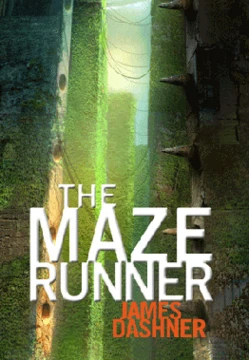
The Ruined Outside World
A world burned to bone, where the only cure is the one they were never meant to find.

The Ruined Outside World is the post-apocalyptic backdrop of James Dashner's The Maze Runner trilogy. After a devastating pandemic known as the Flare tore through global civilization, what remains is a shattered landscape of collapsed cities, scorching wastelands, and fortified enclaves. This ruined world is not merely scenery—it is the central antagonist of the series, a place where survival is measured in heat, thirst, and the ever-present threat of mutated creatures.
For the Runners, the outside world is a brutal escalation. They move from the confined, shifting stone corridors of the Maze into the endless, sun-bleached expanse of the Scorch, and finally into the rigid, walled order of the City. Each environment strips away a layer of safety and forces the group to confront not only the physical devastation but the moral rot of the organization, WCKD, that engineered their suffering in the name of a cure.
- Type
- Post-apocalyptic setting
- Primary threat
- The Flare (a global disease)
- Governing body
- WCKD (World Cure for Kids with Diseases)
- Key locations
- The Maze, The Scorch, The City
- Era
- Post-Flare, civilization largely collapsed
- Survival conditions
- Extreme heat, scarcity of water and food, mutated fauna
- Status
- Ruined; pockets of order maintained by WCKD
Lore & Background
The Flare did not merely kill; it unmade. Cities that once hummed with industry and commerce lay in rubble, their infrastructure a skeleton of rebar and cracked concrete. The disease spread fast, mutated those it touched, and left behind a world where the sky itself seemed thinner, the sun more punishing. In the ruins, nature reclaimed what it could—cracked highways split by scrub brush, overgrown parking lots, the slow creep of vegetation through shattered glass. But the heat was the true constant. The Scorch, in particular, is a vast expanse of baked earth and bleached rock where the temperature can be lethal within hours, and where the air shimmers with heat distortion that makes the horizon a mirage.
WCKD positioned itself as the saviors of this broken world, building the City as a walled sanctuary where the remaining population could live under their protection. In truth, the City was a laboratory and a prison, its walls as much a barrier keeping people in as keeping the Scorch out. The Runners—teenagers with no memory of their past, dropped into the Maze as test subjects—were the raw material of WCKD's desperate research. The organization's logic was cold and utilitarian: sacrifice a generation's freedom to crack the genetic code of the Flare and save the rest. The ruined world outside the walls was not a tragedy WCKD was trying to fix so much as a justification for the control they already held.
What makes the outside world so viscerally threatening to the Runners is its totality. The Maze, for all its danger, was bounded. You could map it, you could find a pattern. The Scorch had no walls, no corners, no shelter. The City had walls but also rules, surveillance, and a hierarchy that reduced the Runners to specimens. In every environment, the world itself was an adversary—indifferent, vast, and utterly without mercy for a group of teenagers trying to survive.
In Their Own Story
The sun hit the cracked asphalt like a hammer. Thomas pressed his back against the rusted hull of an overturned bus, the metal radiating heat through his shirt, and watched the shimmering horizon swallow the last of their water. Newt was already rationing, counting drops with a grim little smile that never reached his eyes. Behind them, the Scorch stretched in every direction—no trees, no shade, no sound but the dry rasp of wind over dead earth. Somewhere out there, past the mirage-line, the walls of the City rose like a gray jaw. Minho had said they'd be safe inside. Minho had said a lot of things. Thomas pulled his sleeve over his nose, tasted the grit, and started walking. The ground was too hot to feel. That was the worst part.
Reader's Guide
The Maze is a colossal labyrinth of towering stone walls, its corridors shifting every nightfall. The air is thick, the stonework cold and slick with moisture, and the Gladers—vast, chitinous creatures—lurk in the shadows. Survival here means memorizing paths before the geometry rewrites itself, conserving water, and trusting your group when the walls close in.
The Scorch strips everything away. It is a vast, sun-bleached desert of baked rock, cracked earth, and shimmering heat. There is no shade, no structure, no mercy. The air burns your throat. Water is the single most precious resource, and the mutated creatures that roam the wastes are fast, numerous, and relentless. The Runners move in tight formations, covering their skin, conserving every drop, and navigating by the sun's position because there is nothing else to orient by. The Scorch does not shift; it simply endures, vast and indifferent.
The City is the antithesis: walled, structured, and suffocatingly controlled. The air is filtered, the streets are clean, and the people move in orderly rows under WCKD's watch. But the walls are a cage, the food is rationed, and the Runners are treated as assets rather than people. The sensory shift is jarring—after the raw, animal survival of the Scorch, the City's sterile order feels like a different kind of death.
Across the trilogy, the outside world escalates from confined danger to open, existential threat to institutional oppression. Each environment demands a different survival instinct, and none of them offer the Runners a home.
Did You Know?
- The Flare is not just a disease in the background—it is the reason WCKD exists, the reason the experiments happen, and the reason the Runners' blood becomes the most contested resource in the story.
- The Scorch is deliberately designed as the emotional and physical opposite of the Maze: where the Maze is enclosed, dark, and shifting, the Scorch is open, blindingly bright, and static in its hostility.
- WCKD's name—World Cure for Kids with Diseases—frames their entire operation as a benevolent medical mission, which makes their willingness to sacrifice teenagers all the more chilling.
- The City's walls serve a dual purpose in the narrative: they protect the population from the Scorch and the mutated outside, but they also prevent the Runners and other residents from ever leaving.
More in World & Settings
Elsewhere in the The Maze Runner universe
Spotted an error? Know more?
This is a living reference — every entry is fact-audited, and reader corrections feed straight into our audit queue. Suggest an edit · See this site's audit record