The Maze's Core
At the heart of the green walls, a single door holds the truth the world buried.

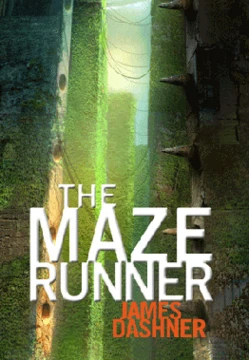
The Maze's Core is the small, circular clearing at the very heart of the great shifting labyrinth that traps the Gladers in the first novel of James Dashner's trilogy. Surrounded on all sides by the towering, ivy-draped walls that define the Maze, the Core is where the boys' desperate search for an exit culminates in the discovery of a massive metal door set into the stone. That door, once opened, reveals a sterile control room and a computer terminal that shatters their understanding of the world beyond the walls.
Across the trilogy, the Core evolves from a literal destination into a symbol: the last green, enclosed, living space before the dead, irradiated Scorch swallows everything. It anchors the story's central revelation—that the Maze was never a prison to escape but a test engineered by WCKD—and it haunts the characters long after they've left its walls behind.
- Location
- Center of the Maze labyrinth
- First appears
- The Maze Runner (Book 1)
- Key feature
- A massive metal door set into the surrounding wall, leading to a computer room
- Operated by
- WCKD
- Function
- Terminal testing area / containment endpoint
- Status by trilogy's end
- Abandoned; the Maze no longer functions as a living structure
Lore & Background
The Core is the one place in the Maze where the walls stop stretching into an endless corridor and instead curve inward, forming a tight ring. The vegetation here is thicker, the moss deeper, the air heavier with the smell of wet stone and growing things. The boys who reach it after weeks of navigating the shifting outer passages find themselves in a space that feels almost sacred in its stillness—a green cathedral at the center of a living puzzle. It is here, pressed against the cold metal of the door, that the group confronts the question they have carried since they woke in the Maze with no memories: what lies beyond the walls, and who built them?
The door's opening is the pivotal revelation of the first book. Behind it is not freedom in any conventional sense. The computer room is small, clinical, and utterly alien compared to the organic chaos of the Maze. The terminal displays the Scorch: a world of irradiated dust, dead forests, and toxic skies. The boys realize the Maze was not a place they fell into but a place they were placed into, a controlled experiment run by WCKD to test their cognitive abilities under pressure. The Core, in that moment, stops being a goal and becomes a verdict.
In the later books, the Core recedes into memory. The Scorch and the walled City become the new arenas of survival, and the Flies—now understood as something far more dangerous than simple predators—reshape the threat landscape entirely. The Maze, and its green heart, becomes a contrast the characters can no longer return to: a reminder that the world they were tested in was, in its own confined way, alive.
In Their Own Story
The moss on the Core walls was different from the rest of the Maze. Thicker. Greener. It clung to the stone in dense, dripping curtains, and the air tasted of iron and wet earth. Thomas knelt and pressed his palm flat against the ground. It was warm. Alive. The walls rose on every side in a perfect circle, and at the far end, the door waited—smooth, gunmetal, indifferent. Behind them, the others were already arguing, voices cracking in the humid dark. He could smell the Flies' chemical tang on the wind, faint but growing. One more night and the walls would shift, and this circle, this one fixed point, would be gone. He looked at the door. He looked at the green. He thought about the boy who had run into the Maze with no name and no past, and who had, against every odds, learned to read the walls. The door did not care about any of it. It simply stood there, waiting for a hand brave enough to turn the handle and let the dead world pour in.
Reader's Guide
The Core is a circular clearing, perhaps a hundred meters across, ringed by the Maze's signature walls—enormous, easily a hundred feet tall, sheathed in thick ivy, moss, and creeping vines that make the stone look like the skin of some vast green creature. The floor is packed earth and broken flagstone, slick with condensation. The air is dense, humid, and smells of loam and chlorophyll. At the center of one wall stands the door: a slab of brushed metal, featureless, set flush into the green. The others have no handles, no seams. You find it by touch.
The rules of the Maze are absolute. At nightfall the walls groan, grind, and rearrange; the layout you memorized by day is useless by morning. The Flies emerge in the dark, and the boys survive by retreating to the few open pockets they've mapped. The Core, by contrast, is fixed. It does not shift. That stillness is what makes it feel like the one honest place in the whole labyrinth.
Beyond the door, the world changes entirely. The Scorch is a blasted expanse of cracked earth, skeletal dead trees, and a sky the color of rust. There is no green. No humidity. Just heat, radiation, and the distant hum of the walled City, where survivors press their faces to reinforced glass and watch the toxic clouds roll in. The contrast between the Maze's enclosed, breathing green and the Scorch's open, irradiated silence is the trilogy's most visceral shift in setting.
By the final book, the Maze is a memory. The Core's door is a relic. The real frontier is the Flies, WCKD's hidden agenda, and the question of whether the world outside the walls can be saved at all.
Did You Know?
- The Core is the only fixed, non-shifting area in the Maze; the walls around it do not rearrange at night, making it the one reliable landmark in an otherwise unpredictable labyrinth.
- The door in the Core leads not to an exit into the world but to a small computer room, meaning the boys' 'escape' is actually a controlled reveal of the Scorch rather than genuine freedom.
- The vegetation on the Maze walls is so thick and dense that the structure reads as a living, growing organism rather than a built one, reinforcing the sense that the Maze is an ecosystem rather than a machine.
- WCKD designed the Maze as a testing ground for the boys' problem-solving and leadership under extreme stress, making the Core the endpoint of a deliberate experiment rather than a random dead end.
More in World & Settings
Elsewhere in the The Maze Runner universe
Spotted an error? Know more?
This is a living reference — every entry is fact-audited, and reader corrections feed straight into our audit queue. Suggest an edit · See this site's audit record