The Post-Apocalyptic World
A dead world, a living experiment, and a cure that may cost more than it saves.

The post-apocalyptic world of The Maze Runner is the shattered civilization that remains after a devastating virus—known as the Flare—wiped out the vast majority of humanity. What was once the global landscape is now a toxic, barren expanse called the Scorch, punctuated only by the fortified enclave known as the City, where the remnants of society cling to survival under the authority of WCKD, a secretive scientific governing body.
This setting is not merely backdrop; it is the engine of the entire trilogy. Every institution, every experiment, and every moral compromise in the story flows from the simple, horrifying fact that the world outside the City's walls is dead. The Maze, the Glade, the memory-wiping, the Gladers—all of it exists because WCKD believes (or claims to believe) that solving the Maze is humanity's last shot at a cure. The post-apocalyptic world is the 'why' that makes the 'what' of the story possible.
- Type
- Post-apocalyptic setting / world state
- Primary threat
- The Flare (a virus that devastated global civilization)
- Governing body
- WCKD (World Council of Scientific Directors)
- Key locations
- The Maze, The Scorch, The City, The Glade
- First appears
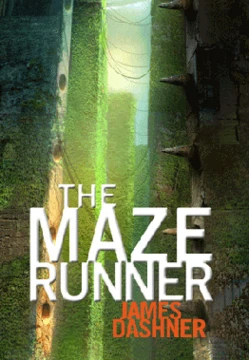
- The Maze Runner (2009 novel by James Dashner)
- Status
- Ongoing setting across the full trilogy (books and films)
Lore & Background
Before the Flare, the world was the world we know—cities, nations, infrastructure. The virus, whose exact origin is never fully explained in the canon, spread with catastrophic speed and lethality. Those infected suffered a painful, progressive deterioration before death. Within a generation, the surface became uninhabitable: the Scorch is a landscape of irradiated, contaminated ground where even the air is toxic without filtration. It is not a wasteland of ruins so much as a place where the very soil and atmosphere have been rendered hostile to human life.
WCKD, the scientific council that survived the collapse, made a pragmatic and morally fraught decision: retreat into a sealed environment and preserve a fraction of the population. The City is that refuge—underground in the novels, a massive enclosed structure in the films—where survivors live under strict rationing, surveillance, and the constant authority of WCKD's leadership. Life inside is orderly but claustrophobic; the sky is a memory, and the outside world is a warning.
The Maze was WCKD's answer to the Flare: a vast, shifting labyrinth designed as a cognitive puzzle whose solution would yield a cure. The boys sent into it—Thomas, Newt, Minho, and the others—were not volunteers in any meaningful sense. Their memories were erased, their identities reduced to variables in an experiment. The Gladers, monitoring from the other side, were told they were saving the world. What they were actually doing, as the truth slowly bleeds out, was running a controlled test on human subjects while WCKD's true priority remained the preservation of its own power and the City's survival. The post-apocalyptic world is thus not just a setting but a moral argument: when the world ends, who decides who gets to live, and at what cost to those who don't?
In Their Own Story
Thomas pressed his palm against the cold metal of the City's outer wall and felt the hum of the filtration systems thrumming through the steel like a second heartbeat. Beyond that wall—beyond the air scrubbers, the radiation shielding, the locked gates—lay the Scorch. He'd seen it once, through a cracked viewport on a maintenance run. No color. No sound. Just a flat, ashen plain stretching to a horizon that looked like the sky had been scraped away. A single dead tree stood in the middle distance, its branches frozen in a shape that almost resembled a hand reaching up. He couldn't tell if it was reaching for the sun or pushing it away.
He pulled his hand back. The wall was warm. The air inside tasted faintly of recycled ozone and antiseptic. Somewhere behind him, the distant clatter of a supply cart on rails, a voice calling a shift change. Normal. Safe. The kind of safe that meant someone, somewhere, had decided the world outside didn't get to exist anymore.
He turned and walked back into the corridor, the hum of the City swallowing the silence behind him.
Reader's Guide
The reader first encounters the world as a boys' puzzle: a Maze, a Glade, a set of rules. The 'why' is deliberately withheld. WCKD's propaganda, delivered through the Gladers and the City's authorities, frames the experiment as a noble sacrifice—boys volunteering to crack a code that will cure the Flare and restore civilization. The Scorch is presented as an unavoidable consequence, a scar the world will heal once the cure is found.
What the characters discover undermines every comfortable narrative. The Flare is not a natural disaster but a virus, and WCKD's response was not rescue but containment. The City is not a sanctuary but a fortress built on exclusion—those inside are 'saved,' those outside are expendable. The Maze was not a pure cure-seeking experiment; it was a controlled test of human resilience, with the boys as disposable variables. Memory-wiping was not protection; it was control.
Book vs. film: In Dashner's novels, the City is explicitly underground, a vast subterranean complex, and the Flare is described in more biological, almost fungal terms. The films render the City as a massive enclosed surface structure and lean harder into radiation and visual spectacle for the Scorch. The core WCKD motivation—self-preservation dressed as altruism—remains consistent, but the films compress the Gladers' moral ambiguity and give the Flare a more conventional 'zombie-virus' visual language.
Did You Know?
- In the novels, the City is described as an underground complex, while the films reimagined it as a massive enclosed surface structure—a notable visual and spatial shift between adaptations.
- The Flare is never fully explained in terms of its origin or exact mechanism; the canon deliberately leaves it as a mystery, which is part of WCKD's information control.
- The Scorch is not merely 'ruined civilization'—the environment itself is hostile, with contaminated soil and air, making survival outside the City's filtration systems impossible without protection.
- WCKD's full identity and the true scope of its authority are revealed gradually across the trilogy; early on, the characters (and readers) only know it as the faceless authority behind the Gladers and the City.
More in Lore & History
Elsewhere in the The Maze Runner universe
Spotted an error? Know more?
This is a living reference — every entry is fact-audited, and reader corrections feed straight into our audit queue. Suggest an edit · See this site's audit record