The Maze
A labyrinth that rewrites itself every night, and the boys trapped inside it.

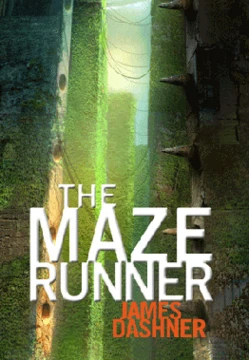
The Maze is the central setting and primary antagonist of James Dashner's The Maze Runner trilogy. A colossal, ever-shifting labyrinth of towering walls trapped in a mountain valley, it is the first of three brutal stages in a secret experiment orchestrated by the World Health Coalition and Disease (WCKD). Inside its corridors, a group of teenage boys known as the Runners wake each morning to a completely new layout, forced to solve puzzles, avoid the monstrous Gladers, and search for the elusive 'light at the end' that WCKD has promised as their way out.
For fans, the Maze is far more than a backdrop. It is a character in its own right—cold, indifferent, and lethal—embodying the dehumanizing logic of the institution that built it. Every shifting wall, every snarling Glader, and every whispered rumor about the light at the end reinforces the trilogy's core question: what is a person worth when a corporation decides their mind is a laboratory?
- Creator
- WCKD (World Health Coalition and Disease)
- Location
- A valley enclosed by sheer mountain walls
- Primary inhabitants
- The Runners (teenage boys) and the Gladers (Grievers)
- Defining feature
- Wall configuration resets every night
- Stated purpose
- To observe and test the Runners' problem-solving under extreme stress
- True purpose
- A component of WCKD's Flare-cure research using the Runners' immune biology
- Status by story's end
- Abandoned and ultimately destroyed
Lore & Background
The Maze is not a natural formation. It is an engineered environment, built by WCKD in a remote valley whose surrounding cliffs make escape impossible. The walls—enormous, smooth, and seemingly seamless—reconfigure their entire layout during the night, so that any route memorized by day is worthless by morning. This nightly reset is the Maze's most defining cruelty: it denies the Runners the one thing that would let them plan, which is a stable map. Every sunrise presents a new puzzle, and the only constant is the knowledge that the Gladers, the Maze's predatory creatures, are still out there in the dark.
The Runners who inhabit the Maze are teenagers who arrived with no memory of their past lives, each dropped in one at a time through a metal elevator. They quickly form a tight-knit society with a hierarchy led by Minho, a set of rules, and a shared obsession: finding the 'light at the end,' a faint glow visible from certain vantage points that WCKD has told them is their exit. The light functions as both hope and bait. It keeps the Runners focused on solving the Maze rather than questioning why they are there, who put them there, or what the Gladers are for. The social dynamics—loyalty, fear, the tension between the older Runners and the newest arrival—give the Maze a human heartbeat that contrasts with its geometric indifference.
In the broader trilogy, the Maze is explicitly the first of three stages. WCKD's propaganda frames each stage as a 'test' the Runners must pass to earn freedom and a cure for the Flare, the pandemic that has turned much of the world's population into violent, mindless creatures. The Runners are told they are volunteers, that their immune blood is the key to saving humanity, and that WCKD is their savior. What the characters gradually uncover is a far uglier truth: WCKD is not saving anyone. The Runners are disposable test subjects, their immune biology is being harvested, and the 'cure' WCKD has been distributing is actually accelerating the Flare. The Maze, the Scorch, and the City are not stages of a rescue mission. They are a pipeline for extracting data from children while the world outside rots.
In Their Own Story
Thomas pressed his palm flat against the wall and felt it hum, a low vibration like a living thing breathing. The sun was already setting, painting the canyon in shades of rust and violet. Around him, the Runners huddled in the open square, their faces tight with the particular dread that settled over them each evening—the dread of the shift. Newt was already sketching routes in the dirt, then erasing them, then sketching again, as if the act of drawing a path could make it permanent. Minho stood at the edge of the square, arms crossed, watching the light at the end flicker and die behind a new wall that hadn't existed an hour ago. The Gladers were out. Thomas could hear them: a wet, clicking scuttle in the corridors beyond, patient and endless. He looked at the wall under his hand, at the faint seam where two panels met, and wondered—again, as he wondered every night—whether the Maze was a puzzle to be solved or a cage to be endured. The hum under his fingers didn't answer. It never did.
Reader's Guide
The reader meets the Maze as Thomas does: disoriented, amnesiac, and dropped into a world with no rules except the walls and the Gladers. The first book is essentially a slow revelation. WCKD's voice—delivered through the elevator, through briefings, through the promise of the light at the end—frames the Maze as a benevolent test. The Runners are told they are chosen, that their immunity to the Flare makes them humanity's last hope, and that if they solve the Maze they will be free. This is propaganda, and the trilogy's architecture is designed to peel it back layer by layer.
By the second stage, the Scorch, the veneer cracks. The environment is no longer a puzzle but a survival gauntlet, and the Runners begin to suspect that WCKD is not trying to save them. The 'cure' they are asked to help develop is revealed to be a vector that worsens the Flare. WCKD is not a healer; it is a parasite using the Runners' immune blood as a resource while the population outside is deliberately kept in a state of managed collapse.
The third stage, the City, strips away the last pretense. There is no test. There is no exit. There is only extraction. The Runners' immunity is the product WCKD is harvesting, and the Maze, the Scorch, and the City are merely the assembly line.
Book versus film: in Dashner's novel, all the Runners are boys, and the social dynamics are shaped entirely by that. The film introduces Teresa, a young woman who arrives later, which shifts the group's emotional center and adds a romantic thread absent from the book. The film also visualizes the Maze walls as more architectural and concrete, while the book leans into a more organic, almost vegetative texture. The Gladers, too, are rendered differently: the book's descriptions are more abstract and terrifying in their ambiguity, while the film gives them a more defined, insectoid silhouette. These are the main adaptation divergences a reader should expect.
Did You Know?
- The Maze's nightly wall-reset means the Runners can never build a reliable map, which is why their society develops an oral, memory-based culture of routes and landmarks that is wiped clean every morning.
- The 'light at the end' is never actually a door or an exit in the traditional sense; it functions more as a psychological anchor that WCKD uses to keep the Runners focused on solving rather than questioning.
- In the novel, every Runner is a boy, and the group's dynamics are shaped by that homogeneity; the film adds Teresa as a female member, altering the social and emotional texture of the ensemble.
- The Gladers are not random wildlife. They are part of the Maze's engineered ecosystem, placed there by WCKD to raise the stakes of the 'test' and to observe how the Runners' brains respond to extreme, sustained threat.
More in Lore & History
Elsewhere in the The Maze Runner universe
Spotted an error? Know more?
This is a living reference — every entry is fact-audited, and reader corrections feed straight into our audit queue. Suggest an edit · See this site's audit record