The Flare
A plague that ate the world, and the desperate science built to outlive it.

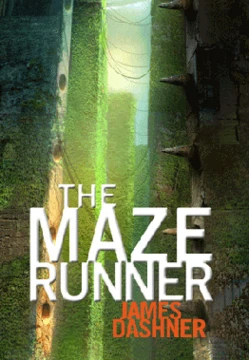
The Flare is the apocalyptic pandemic that defines the world of James Dashner's Maze Runner trilogy. A devastating neurotoxic disease, it swept across the globe, collapsing governments, infrastructure, and civilization within a single generation. Those who contract it descend into violent, hallucinatory aggression before a slow and agonizing death, leaving behind a scorched, irradiated wasteland where the survivors cling to fragile pockets of order.
In the narrative, the Flare is far more than a backdrop: it is the engine of every experiment, every moral compromise, and every desperate choice the characters make. The enigmatic organization WCKD built the Maze, the Glade, and the entire apparatus of the Runner trials in service of one singular goal—engineering a cure for a plague that has already consumed the world. The Flare is the true antagonist of the trilogy, the invisible hand pulling every thread from the opening page to the final release of the serum.
- Type
- Pandemic neurotoxic disease
- Primary symptoms
- Extreme aggression, hallucinations, loss of higher cognition, eventual death
- Culprit organization
- WCKD (attempts to cure; origin later revealed)
- First appears
- The Maze Runner (Book 1)
- Global impact
- Collapse of civilization; creation of the Scorch wasteland
- Status in series
- Central existential threat across all three novels
Lore & Background
In the world of the trilogy, the Flare arrived without warning and spread with terrifying speed, converting healthy human beings into snarling, hallucinating husks within hours. There was no quarantine, no containment protocol, no military that could hold a line against a pathogen that turned your neighbor into a predator. Cities burned. Supply chains shattered. Within a generation, the dense, interconnected civilization of the pre-Flare era was reduced to scattered, desperate communities huddled in fortified enclaves, and the land between them became the Scorch—a vast, irradiated, toxic wasteland where even the air was poisoned.
WCKD, the successor body to global health agencies, became the last institution still functioning with any coherence. Their public mission was the cure. Their private methods were far less transparent. The Maze was not merely a puzzle; it was a behavioral laboratory. The Glade was a biological one. Boys were fed, tested, and discarded to map problem-solving under extreme stress. Girls were dosed, observed, and sacrificed to isolate the antibodies that might one day neutralize the Flare. Every Runner who never made it back from the Scorch, every boy who woke in the Maze with no memory of his name, was a data point in a calculus where human lives were the currency and the Flare was the debt being paid.
The most devastating revelation of the trilogy is that the Flare was not a natural accident. It was engineered—designed, refined, and unleashed. This single truth reframes every act of WCKD, every 'rescue,' every sterile corridor and humming server room. The organization that promised salvation was also implicated in the creation of the catastrophe, and the cure they were chasing was, in part, an attempt to manage the consequences of their own handiwork. The Flare, then, is not just a virus. It is a moral wound in the shape of a pathogen, and the characters must decide whether the people who made it deserve to be the ones who unmake it.
In Their Own Story
The corridor was white. Not the warm white of a hospital, but the flat, surgical white of a place that had forgotten what sunlight looked like. Thomas pressed his thumb against the cold glass of the observation panel and watched, through the haze of recycled air, a woman in a hazmat suit walk past a row of incubation tanks. Each tank held a pale, still figure, veins dark beneath translucent skin, a thin ribbon of greenish fluid looping through a port in the wrist. The Flare, in its final stage. Not yet aggressive. Not yet gone. Just… waiting.
Behind him, Newt's boots scraped the tile. "They keep them alive," Newt said, voice flat, almost reverent. "Not to save. To watch. To learn what the thing does to a mind before it eats the mind whole."
Thomas didn't answer. He was watching the woman's hand hover over a vial on a shelf—amber liquid, no bigger than a thumbnail, catching the fluorescent hum. The cure. Or the next iteration of it. In this place, the line between those two things was thinner than the glass between him and the tanks, and he was not sure he trusted his own hands to hold it steady.
Reader's Guide
Thomas wakes in the Maze with no memory, and the first thing he learns is that the world outside is already dead. The Flare is spoken of in hushed, fearful tones by the other Gladers—not as a distant news story but as the reason they exist, the reason WCKD feeds them, tests them, and occasionally lets them die. The pandemic is the invisible wall around the Maze, more absolute than the stone.
As the Maze experiment collapses and the group flees into the Scorch, the Flare stops being abstract. The wasteland is its monument: irradiated, toxic, stripped of green. Survivors in fortified enclaves speak of the infected with the same dread as a natural disaster. The group learns that WCKD's 'rescue' is conditional, that the girls in the Glade are being dosed and killed to isolate antibodies, and that the Flare is not merely a disease to be cured but a problem to be managed, contained, and—Thomas begins to suspect—controlled.
In the final act, the truth surfaces: the Flare was engineered. WCKD, the very organization running the experiments, is implicated in its creation. The moral calculus shatters. The group must now decide whether to release the serum into the global water supply—saving billions but exposing WCKD's crimes—or to let the organization keep its secret and its power. The stakes are no longer survival. They are whether the people who built the plague get to be the ones who end it. The serum is released. The Flare begins to die. And the world, scarred and uncertain, begins the long work of remembering what it lost.
Did You Know?
- The Flare's symptoms progress through stages: initial aggression and hallucinations, a period of violent, animalistic behavior, and a final phase of cognitive collapse before death—making it a slow, watching horror rathe
- WCKD's dual experiment—boys in the Maze, girls in the Glade—was designed so that the behavioral data from one group could inform the biological research of the other, meaning the Flare cure depended on both trials succee
- The Scorch, the irradiated wasteland that forms the setting of the second book, is a direct physical consequence of the Flare's collapse of global infrastructure and the subsequent environmental fallout, making the lands
- The revelation that the Flare was engineered rather than natural fundamentally recontextualizes WCKD from benevolent saviors to morally compromised architects, forcing the characters to question whether a cure from the s
More in Story & Timeline
Elsewhere in the The Maze Runner universe
Spotted an error? Know more?
This is a living reference — every entry is fact-audited, and reader corrections feed straight into our audit queue. Suggest an edit · See this site's audit record