The Glade
Walls that cage you, a gate that counts your days, and a Maze that never stops moving.

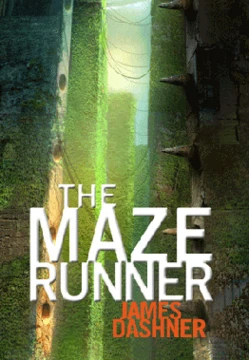
The Glade is the enclosed starting zone at the heart of The Maze Runner — a roughly circular clearing of grass and earth ringed by impossibly tall stone walls, with a single massive gate as the only point of entry or exit. It is where the boys wake with no memories of who they are or how they got there, where they build a fragile society of jobs, hierarchy, and routine, and from which they are periodically sent to run the ever-shifting Maze beyond the gate.
Though it feels like a prison, the Glade is also the only safe ground the boys know. The walls keep the Maze out; the gate's daily opening and closing marks the rhythm of their lives. For WCKD, it is a controlled environment — a holding pen and testing ground. For the boys, it is home, and losing it means losing everything they have built from nothing.
- Type
- Enclosed holding area / starting zone
- Controlled by
- WCKD (World Medical Control Department)
- First appears
- The Maze Runner (Book 1, 2009)
- Key feature
- Single gate that opens once daily
- Beyond the gate
- The Maze
- Inhabitants
- The boys (Thomas, Newt, Minho, and others)
- Purpose
- Holding area and launch point for Maze runs
Lore & Background
The Glade is less a landscape than a mechanism. The walls rise so high that the sky is a thin ribbon above them, and the stone is smooth, featureless, and seemingly seamless — as though the whole structure was grown or poured rather than built. Inside, the ground is flat grass, and the boys have carved out a small civilization: a central fire pit, crude shelters made from whatever materials they can scavenge, and a strict division of labor into Runners, Builders, Thinkers, and other roles. Minho, the de facto leader, enforces order with a quiet, coiled authority that keeps the group from tearing itself apart in the face of constant fear.
The gate is the Glade's beating heart. It groans open each morning with a sound the boys describe as almost alive, and it seals shut again at dusk with a finality that feels like a verdict. When it opens, a new boy may appear on the other side — a Newcomer, disoriented and amnesiac, who will be absorbed into the group or, in Thomas's case, disrupt everything. When it closes, the boys are locked in, and the only way out is through the Maze, where the walls shift, the deadly Grievers hunt, and the geometry of the world rewrites itself overnight.
WCKD's presence is felt in the Glade more than seen. The food appears, the gate operates on schedule, and the boys are expected to run the Maze without being told why. The Glade is, in WCKD's design, a controlled variable: a safe baseline from which to measure the boys' behavior under pressure. The boys, for their part, treat it as the entire world. They do not question the walls. They do not question the gate. They run the Maze because that is what is done, and the Glade is where they return, or where they do not.
In Their Own Story
The gate groaned. It always groaned, that deep metallic shudder that vibrated through the soles of your boots and up into your teeth. Thomas stood at the edge of the grass, arms crossed, watching the slab of stone and iron grind open inch by inch. Beyond it, the first grey light of morning spilled in, and the Maze — that impossible, shifting labyrinth of walls — stretched out in every direction, already rearranging itself in the half-light.
Newt was beside him, jaw tight. "Another run," he said. Not a question.
Minho hadn't spoken. He was already walking toward the gate, hands in his pockets, eyes flat and forward. The boys fell in behind him like a chain being pulled taut. The Builders muttered prayers to no one. The Thinkers scribbled in their little books. And Thomas felt the old familiar dread settle behind his ribs — the sense that the Glade was not protecting them, but containing them. That the walls were not a shield.
The gate swung wide. The Maze breathed in.
They walked out.
Reader's Guide
The Glade is a purpose-built enclosed area designed by WCKD to serve as a holding zone and testing environment for a group of adolescent boys. Its function is straightforward in WCKD's framing: the boys are kept in a safe, bounded space, given just enough structure to maintain social order, and then periodically released through the gate to navigate the Maze. WCKD monitors their performance, their problem-solving, their psychological responses under stress. The Glade is the control group; the Maze is the experiment.
In practice, the Glade operates on a rigid daily cycle. The gate opens once in the morning and seals at night. Food and basic supplies appear without explanation. Newcomers arrive through the gate with their memories suppressed. The boys self-organize into a hierarchy of roles, but WCKD's hand is always present in the background — the walls, the gate, the schedule, the Maze beyond. The boys experience the Glade as a prison with a routine; WCKD experiences it as a laboratory with a sample size.
As a plot device, the Glade establishes the rules of the world before breaking them. It gives the reader a sense of safety, of a place with edges and a logic, before the Maze shatters that logic. Thematically, it represents false security — the illusion that if you stay inside the walls, you are safe. The moment the Glade itself is threatened or revealed to be part of a larger design, the boys are forced to confront what they actually are: subjects, not survivors. The Glade is the cage the reader learns to trust before the story tells them to stop.
Did You Know?
- The Glade's gate opens and closes on a fixed daily schedule, and the boys have no mechanism to override it — their entire access to the outside world is governed by a timer they cannot see or control.
- The boys' social structure inside the Glade — Runners, Builders, Thinkers — is entirely self-organized. WCKD provides the walls and the gate but does not assign roles, leaving the group to build its own hierarchy under p
- The Glade is the only space in the story where the Maze's shifting walls are not a threat. Beyond the gate, the geometry changes overnight; inside the Glade, the walls are fixed and permanent, which is precisely what mak
- In the narrative, the Glade's safety is revealed to be conditional. It is not a sanctuary but a controlled environment, and its apparent permanence is part of WCKD's experimental design, not a guarantee of protection.
More in Powers & Artifacts
Elsewhere in the The Maze Runner universe
Spotted an error? Know more?
This is a living reference — every entry is fact-audited, and reader corrections feed straight into our audit queue. Suggest an edit · See this site's audit record