Chuck
A runner with a short fuse and a long memory for slights.

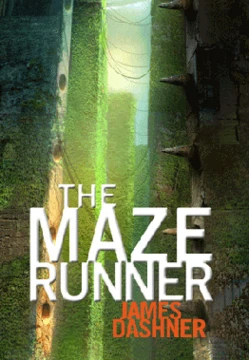
Chuck is a supporting character in James Dashner's The Maze Runner, one of the Gladers—the group of teenage boys trapped inside the ever-shifting labyrinth. He is a runner, meaning he belongs to the small cadre of boys skilled enough to navigate the Maze's twisting corridors without getting lost, a distinction that carries real weight in a community where the Maze is both prison and purpose.
Though he never commands the spotlight the way Minho or Newt do, Chuck is a recognizable presence in the group's daily life. His competitive, confrontational energy makes him a recurring source of friction, and his interactions with newcomers like Thomas help establish the tense, survivalist culture of the Gladers.
- Role
- Runner / Glader
- Affiliation
- The Gladers (boys of the Maze)
- First appears
- The Maze Runner (2009 novel)
- Personality
- Competitive, confrontational, loud
- Group position
- Supporting member of the original Maze group
Lore & Background
In the closed ecosystem of the Maze, the runners occupy a quasi-elite status. They are the ones who can push deep into the labyrinth, find the walls' patterns, and return before the doors slam shut. Chuck is one of these boys, and that skill earns him a measure of respect even when his temper earns him the opposite. He is the kind of Glader who tests boundaries—shoving a newcomer, challenging a minor rule, barking orders at the lower-status boys—because in a world with no adults and no guaranteed safety, asserting dominance is a survival reflex.
His relationship with Thomas is charged from the start. Thomas arrives with no memory and no standing, and Chuck, like several of the older boys, treats him as either a threat to the group's fragile hierarchy or a target for his own restless aggression. This does not make Chuck a villain in the way Gally is; his hostility is more diffuse, a constant low-grade pressure rather than a single act of betrayal. He is the boy who will mock you in front of everyone and then run beside you through the Maze the next morning, because the walls do not care about grudges.
As a supporting character, Chuck functions as texture for the group's social dynamics. He reminds the reader that the Gladers are not a monolith of solidarity but a collection of individual egos, fears, and rivalries, all compressed into a concrete box with a door that opens on a schedule no one controls.
In Their Own Story
The afternoon light through the Maze's upper walls turned the corridor into a long amber tunnel. Chuck ran with his shoulders hunched, boots slapping the flat stone, breathing hard in the way that meant he was three minutes behind schedule and knew it. Newt called out from the junction ahead—'Chuck, you're gonna get us all locked in again!'—and Chuck shot back something sharp enough to make the boy flinch. But they were side by side in the next stretch, shoulders almost touching, both of them watching the far wall for the first crack of shadow that meant the doors were starting to close. No one said sorry. No one said thank you. They just ran, because the Maze did not negotiate, and the only language that mattered here was the one written in the walls themselves.
Reader's Guide
Thomas stumbles out of the box with no name and no memory, and the group's first instinct is to sort him: is he a threat, a problem, or a tool? Chuck, already established as a runner with a reputation for testing people, treats Thomas as the easiest target available. The friction is immediate and personal—shoves, snarls, the kind of small cruelties that keep a newcomer's head down while the group decides what to do with him.
As the Maze's rules are slowly peeled back, Chuck's role as a runner keeps him in the thick of every expedition. He is not the one giving orders the way Minho does, but he is the one on the ground, reading the walls, calling out turns. His competence is real and the group depends on it, even as they resent his bluster. He is the bridge between the leadership's decisions and the physical reality of the labyrinth.
When the group fractures under the pressure of the Grievers, the pigs, and the growing suspicion that WCKD is pulling strings, Chuck's loyalty is tested not by a single dramatic betrayal but by the slow erosion of trust. He stays, he runs, he barks at people who annoy him—but the easy confidence of the early chapters has been ground down. By the time the group is forced to confront what lies beyond the Maze, Chuck is no longer just a loud rival; he is a survivor who has learned that the walls close on everyone equally, and that the only thing worse than being locked out is being locked in with people you stopped trusting.
His arc is small but real: from a boy who asserts himself through aggression to one who asserts himself through showing up, running, and not quitting. In a story about a group of kids trying to outsmart a corporation, Chuck is the reminder that competence and kindness are not the same thing, and that both are needed to get through the door.
Did You Know?
- Chuck's status as a 'runner' places him in a small, high-trust subset of the Gladers—the boys physically and mentally capable of navigating the Maze's shifting corridors, a skill the entire group depends on for survival.
- His confrontational behavior toward Thomas mirrors the broader pattern in the Maze: newcomers are tested, mocked, and pressured before they are accepted, a social ritual that reinforces group cohesion in the absence of a
- Unlike Gally, whose antagonism culminates in a single dramatic act of betrayal, Chuck's hostility is diffuse and ongoing—more a personality trait than a plot device—making him a study in how small, repeated friction shap
- The runners' role is tied directly to the Maze's mechanical logic: the doors close on a fixed schedule, and only the runners can reliably find their way back before the walls seal, making them the group's de facto lifeli
More in Story & Timeline
Elsewhere in the The Maze Runner universe
Spotted an error? Know more?
This is a living reference — every entry is fact-audited, and reader corrections feed straight into our audit queue. Suggest an edit · See this site's audit record